Extradition risks after a business dispute in Russia
A criminal case arising from a business dispute in Russia can lead to arrest and extradition from abroad. How do different countries handle extradition requests from Russia?
Igor Pestrikov left Russia when the state seized his shares in the Solikamsk Magnesium Plant and he came under investigation for alleged misappropriation. Russian authorities then circulated a request for his arrest through Interpol and sentenced him in absentia to eight years in prison.
Pestrikov told the BBC that he could not rent a flat in France, his bank accounts were frozen, and police could ‘break into his house at any time’. He links the case to his refusal to sell the plant’s products at lower prices to buyers named by the Russian authorities.
Pestrikov successfully challenged the request that put him at risk of arrest and extradition. In other cases, foreign authorities acted on Russia’s requests.
🇨🇾 Cyprus extradited Alexei Korotenko, a former board member of Yugra Bank, to Russia in 2026 in a tax evasion case. He said Russian authorities wanted to force him to give false testimony against Alexei Khotin, the bank’s former owner. A Cypriot court kept him in custody pending extradition.
🇨🇷 Costa Rica extradited Kamal Kimpaev, the former head of Dagestan-based Elektron, to Russia in 2025 amid the company’s dispute with Rosseti. Prosecutors charged him with fraud, alleging that Elektron collected electricity payments from customers without passing them on to Rosseti. DagEnerZhi, which worked with Elektron, said Elektron had settled its accounts with Rosseti and accused the utility of trying to drive both companies out of the market.
🇲🇪 Montenegro extradited lawyer Olga Abramova to Russia in May 2024 in a fraud case. She was sentenced to two years in prison. Prosecutors alleged that, amid a dispute over control of Infinit Markets, she filed court documents claiming a fictitious debt to lay the groundwork for bankruptcy proceedings against the company. Abramova said a client who found her through an Avito ad paid her for ad hoc legal work and gave her documents she did not know were forged.
Assessing the risk of arrest and extradition
Interpol found that the case against Pestrikov was predominantly politically motivated and removed Russia’s request from its system. It has also removed many other Russian requests following challenges.
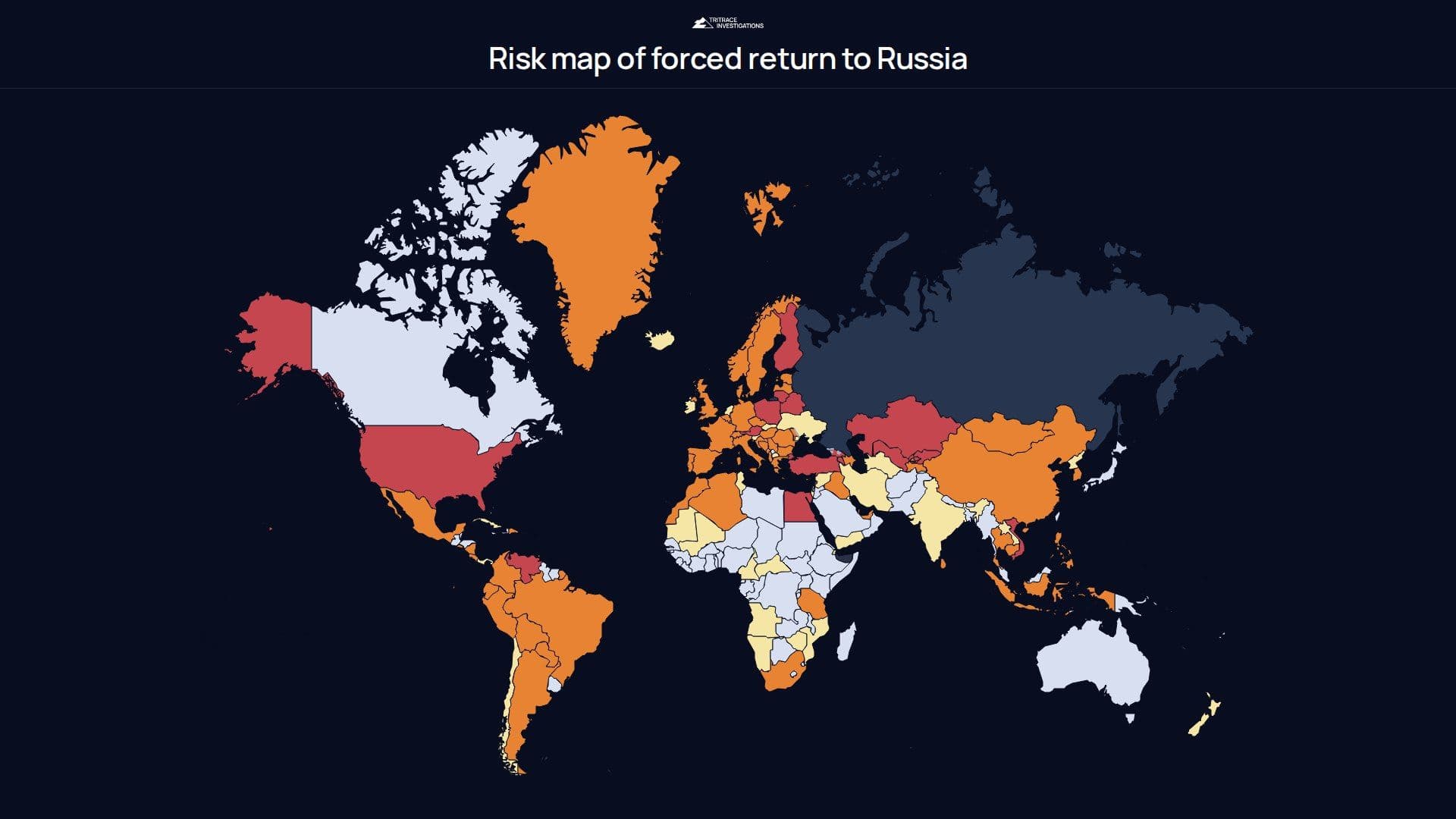
However, a request circulated through Interpol is one of several ways a person can end up facing extradition to Russia. The risk of arrest and extradition depends on how the country concerned handles Russian requests.
Our Risk Map of Forced Return to Russia brings together publicly reported extradition cases. It offers an initial overview of how different countries cooperate with Russia on extradition.
On request, TriTrace Investigations monitors how individual jurisdictions handle requests from Russia and provides clients with a risk assessment report.