Russian Assets in Norway: What Enforcement Cases Reveal
Norwegian cases involving Naftogaz and Yukos Capital show how ownership, use and the special status of property affect the prospects of enforcement.
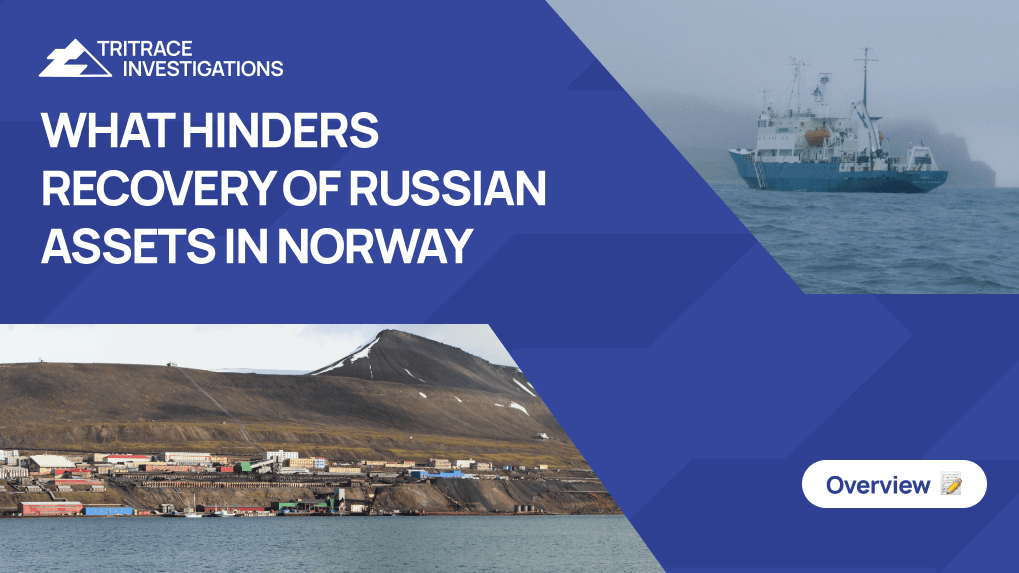
Since late 2024, Norwegian courts have considered enforcement claims against Russian assets brought by Ukraine’s Naftogaz and Yukos Capital. Some concern property in Svalbard, a Norwegian archipelago with Russian mining settlements and the state-owned enterprise Arktikugol.
Some claims have failed or met obstacles. These cases show which circumstances can make an asset subject to enforcement or shield it from it.
🔹Ownership of the asset
At Naftogaz’s request, a Norwegian court authorised the arrest of the research vessel Professor Molchanov. After its review, Naftogaz’s lawyers at Wikborg Rein concluded that the vessel was not protected by state immunity. In court, they said they had tried to establish its formal owner, but Russia’s ship register was unavailable.
Arktikugol, which operates in Svalbard, argues that the vessel belongs to a state meteorological organisation and is immune from enforcement, and seeks to lift the arrest. Rosgidromet’s 2025 data and the 2011 Equasis register indicate a link between the vessel and Russia’s hydrometeorological service.
🔹Use of the asset
Courts consider how property is used. Naftogaz cited websites offering commercial expedition cruises on Professor Molchanov. Arktikugol said the vessel also supplies Barentsburg and would be difficult to replace under sanctions. On one voyage in 2026, Professor Molchanov carried both tourists and cargo to Svalbard.
🔹Special legal status
The prospect of enforcement may also depend on an asset’s special legal status. Yukos Capital sought to seize four plots in Svalbard containing Russian settlements, former mines and natural areas. It argued that the plots belonged to Russia because of their connection to Arktikugol.
The court examined the state’s rights in the enterprise’s property and found that Russia held the relevant ownership interests, but refused to allow enforcement. After examining historic buildings, mines and other features on the land, it held that the plots formed part of Russia’s cultural and historical heritage, despite commercial use of parts of the land.
Why preliminary checks matter
In September 2026, Naftogaz secured a court order arresting five Russian real estate assets in Oslo. Its preliminary review covered six assets and excluded one linked to Russia’s diplomatic representation. The other five were included as commercially let properties.
TriTrace Investigations conducts corporate investigations in preparation for legal action. We examine asset-ownership structures, asset use and owners’ connections, and provide reports documenting sources and the course of the investigation
Photo credits: Professor Molchanov / Sykins, CC BY-SA 3.0; Barentsburg / Bjoertvedt, CC BY-SA 4.0