Seeing the Unseen: How Open-Source Intelligence Works
OSINT — a precise and legal method of corporate intelligence that helps businesses identify financial risks and protect their reputation long before signing a deal.
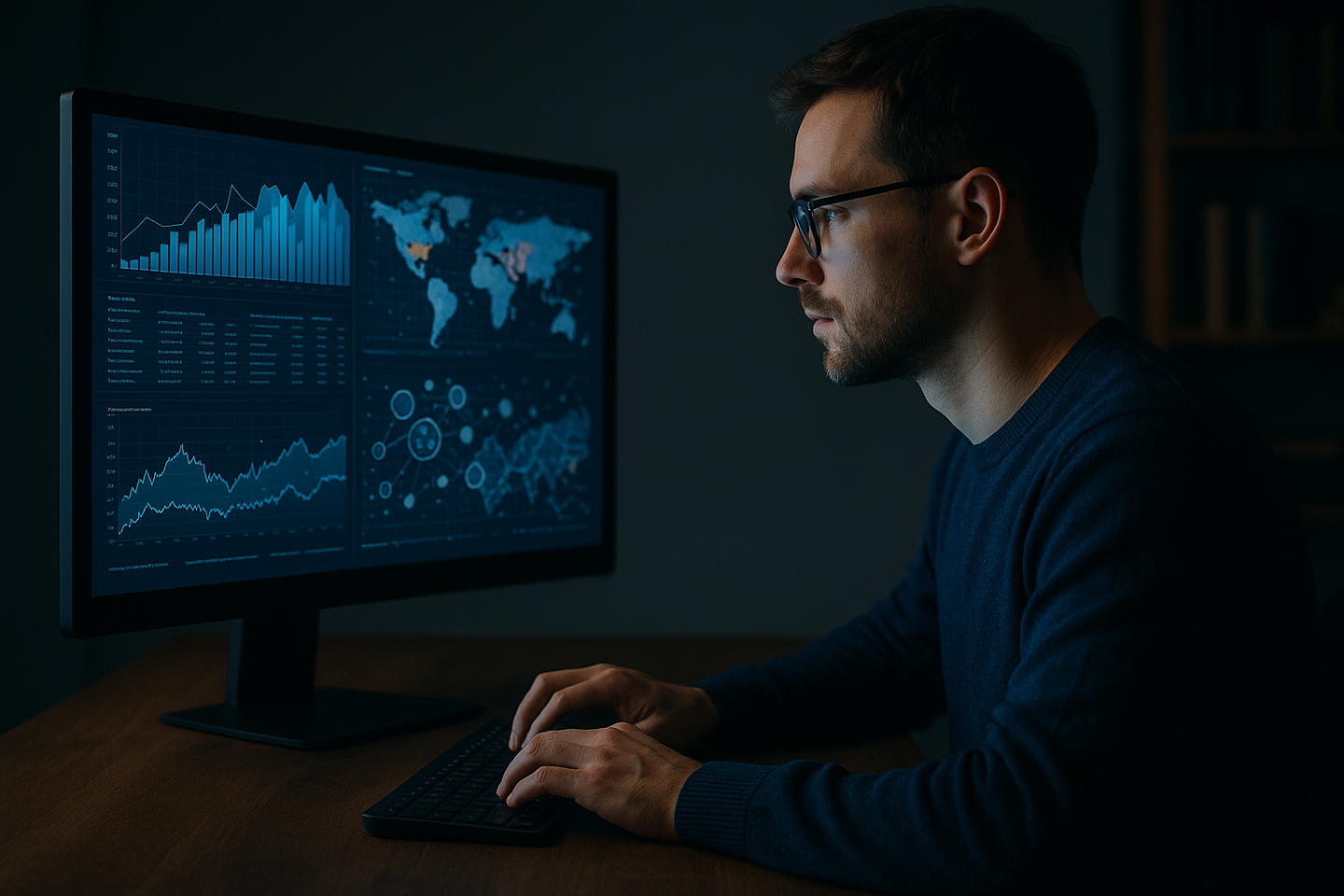
What Is OSINT
Open Source Intelligence is the systematic collection and analysis of data from open sources: government registries, court databases, social networks, commercial archives, satellite imagery, and leaked datasets. Originating in military and counterintelligence practice, today it is used by investigative journalists, corporate security teams, banks, and consulting firms.
Why It’s No Simple Task
A major OSINT investigation is a multi-stage effort that can take months and requires an entire team. The team includes analysts with legal backgrounds, financial-data specialists, developers who build parsers and write scripts to process large datasets, and researchers skilled at linking people and events through indirect evidence.
When the goal is to uncover hidden assets of a person or company, hypotheses are formed: where the asset might be hidden, which personal or corporate ties lead to the ultimate owner. Each hypothesis is tested: some facts come from government registries, some from leaked databases, some from commercial archives where a single record may cost tens or hundreds of dollars. Each hypothesis can take days or weeks as data is cross-checked, analyzed, and verified through independent sources.
For example, when identifying ultimate beneficial owners, a team of analysts may spend months unraveling chains of offshore companies, exposing fictitious deals, and ordering documents from European jurisdictions. The outcome is not just a chart of ownership but a body of evidence that can be presented in court or used to freeze assets. A telling example is the investigation by OCCRP and its partners in France, where journalists used open registries and commercial databases to reveal a network of shell companies behind which Latin American politicians were buying luxury Paris real estate.
In supply-chain audits, a separate group traces shipping routes and intermediary contracts to uncover hidden participation by sanctioned companies. This requires skills in maritime and aviation databases, knowledge of international law, and the ability to find overlaps in vast logistics data. One notable case was a joint investigation by Repórter Brasil, The Guardian, and the Bureau of Investigative Journalism: using satellite imagery and customs declarations, they tracked beef from illegally deforested areas of the Amazon all the way to supermarket shelves in Germany.
Asset tracing demands checking banking links, corporate shares, and property holdings; analysts must correlate data on accounts and companies across countries. Each lead is a new layer of documents, a new request to paid archives, a new comparison with leaks and internal databases. International practice abounds with such cases: as described in Tracing Stolen Assets: A Practitioner’s Handbook, OSINT methods have been used to freeze the assets of corrupt officials by exposing offshore chains and historic banking records.
There is no “magic button” for such projects. Even an experienced specialist cannot, overnight, prove the ownership of an offshore villa or secret involvement in a sanctioned deal. Success depends on methodical, team-based work: verifying every hypothesis, cross-checking sources, and seeing patterns where a casual observer sees only a jumble of numbers and dates.
The result of a serious OSINT investigation is not a simple memo but a detailed, rigorously verified report that can withstand scrutiny in court or in a boardroom with international investors. The work demands not only language skills and legal expertise but also technical proficiency: parsing, API work, and big-data analysis.
Outlook
The growth of data leaks and the development of machine-analysis and AI technologies are making OSINT ever more powerful. A thorough investigation can not only prevent reputational damage in transactions of any scale but also reveal weak links in supply chains, hidden interests of ultimate beneficiaries, and possible sanction-evasion schemes.
For many companies, OSINT research is becoming a necessity: in a world where data is the new gold, knowing a potential partner in depth is the surest way to safeguard one’s own business. Where classical audits once required months, OSINT can now build a defensible evidence base—from initial hypotheses to a final report—faster and more precisely, while staying fully within the law.


